

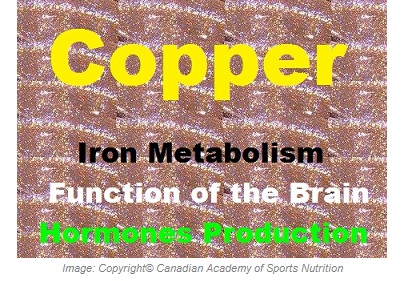
Being an integral part of many enzymes, copper is an essential trace  mineral and plays an important role in iron metabolism. It is a component of ferroprotein, a protein that involves in iron transport across the intestinal cells.
Copper is also a part of superoxide dismutase (SOD), an enzyme with an antioxidant activity that is considered as a component of the body`s natural defence mechanism to scavenge free radicals.
Absorption and Functions of Copper:
Approximately 30% – 60% of copper intake is absorbed quickly into the blood stream from the stomach and upper part of the small intestine. The total amount of copper in the body is about 80 – 100 mg with the highest concentrations in the liver, brain, and muscles.
Normal blood level of copper is 100 mcg/dl, of which about 10% is free copper, and 90% is bound to the protein ceruloplasmin. The absorption of copper is significantly affected by zinc and vitamin C intake, as they interfere with copper absorption.
Functions of copper are as follows:
- Iron metabolism and formation of hemoglobin.
- Synthesis of melanin, a pigment that determines skin color.
- Energy production.
- Neurotransmitter production.
- Scavenging free radicals.
- Development and normal function of the CNS (central nervous system).
- Synthesis of collagen and elastin.
- Production of thyroid hormones.
- Production of adrenaline and histamine.
Food Sources:
Dietary sources of copper are shellfish, oysters, liver, nuts, legumes, buckwheat, and organ meats. Copper also gets into the body by using copper cookware and drinking water coming via copper pipes.
Copper deficiency is relatively rare and may manifest as anemia, growth retardation, mental deterioration, decreased bone density, hypothermia, changes in the color of skin and hair, hair loss, anorexia, dermatitis, fatigue, decreased thyroid function, weak immune system, and cardiovascular disease.
High doses of copper in the long term could lead to copper toxicity. It is usually associated with low zinc levels. Toxicity manifests as nausea, vomiting, diarrhea, tremors, stress, anxiety, poor memory, depression, musculoskeletal pain, insomnia, and poor concentration.
Athletic Benefits of Copper:
Copper may indirectly benefit athletes:
- May delay exhaustion time.
- May enhance endurance by increasing oxygenation.
- Helps speed up recovery from sports injuries, such as strains and sprains.
- Helps shorten reaction time by increasing production of adrenaline.
Non – Athletic Benefits of Copper:
Copper may benefit the following conditions:
- Iron deficiency anemia not responsive to iron supplements.
- Wound healing.
- Low function thyroid.
- Osteoporosis.
- High cholesterol.
- Benign prostatic hyperplasia (BPH).
- Vitiligo.
- Albinism.
- Chronic fatigue syndrome.
- Allergies.
- Stomach ulcers.
- Menkes` disease (a genetic disorder that causes severe copper deficiency).
Dosage and Side Effects:
The recommended daily allowance (RDA) for copper in adults is 900 mcg. Copper is a part of many multivitamins – multiminerals or is combined with zinc only. The usual dosage of copper is 2 – 3 mg a day. When combined with zinc, the best ratio of zinc-to-copper is 15 mg to 1 mg to balance out their absorption. The performance daily intake (PDI) for athletes and physically active people is 3 – 6 mg.
The tolerable upper intake for copper is 10 mg a day, and doses higher than this may cause liver toxicity. High doses of copper could cause nausea, vomiting, stomach upset, headache, dizziness, weakness, diarrhea, and a metallic taste in the mouth.
Contraindications and Interactions:
Copper should be avoided in the following conditions:
- Wilson`s disease: a genetic disorder that results in accumulation of copper in the liver and other organs.
- Scleroderma: copper accelerates collagen production, which may worsen symptoms of this disease. You may consult your doctor regarding taking copper if you have been diagnosed with scleroderma.
Copper has few interactions:
- Zinc: it decreases absorption of copper.
- Vitamin C: it interferes with copper absorption.
- Manganese: it interferes with copper absorption.
- Estrogen and birth control pills: they increase blood levels of copper.
- Nonsteroidal anti-inflammatory drugs (NSAIDs), such as Advil: copper may enhance their anti – inflammatory effects.
- Penicillamine: this medication reduces blood levels of copper.
- Corticosteroids: they may lower blood levels of copper.
- Cimetidine: it may increase blood levels of copper.
Okfungame is good, I enjoy playing game in okfungame. Site have many game for you to choose. If you want try, visit at: okfungame
Downloaded the z8slotapp the other day. Runs smooth on my phone and lots of slots to choose. Good way to kill some time on commute. You should totally try z8slotapp
Alright, Sekabettr, let’s talk turkey. Heard decent things, hopping on to check it out myself. Hoping for a smooth experience and maybe a cheeky win! Check it out here: sekabettr
Hey y’all! Jumped onto 289win the other day. Registration was super easy and the bonuses looked pretty tempting! Check it out maybe 289win.
Tried c77game the other day. I was pleasantly surprised by the variety. Graphics were pretty good too. It’s worth a look if you’re bored of the same old casinos. Head over to c77game and see what you think!
88vinpro is pretty solid, been messing around on there lately. Smooth experience, some fun bonuses- I’d say give it a shot if you’re looking. 88vinpro
Kuwwin is…interesting. It’s got a kind of old-school vibe, but the games are surprisingly engaging. Not my usual cup of tea, but I enjoyed it more than I thought I would. Check it out if you’re feeling adventurous: kuwwin
Been looking at mm68. Seems pretty interesting so far. Definitely worth a look, might have found my new favorite spot. See for yourself: mm68
JLbetPH is cool, it feels more tailored for us Filipinos. Has lots of what we are looking for. Give jlbetph a go, you might like it!
Bn555game, I’m hoping the games are fun and maybe I’ll win something. Take a look by yourself here: bn555game
Hey there! Been messing around on Kuwin1bet lately. Gotta say, the platform is smooth and easy to use. Give it a shot, you might just find your new favorite spot. kuwin1bet
Just jumped on kkkjili22, and gotta say, it’s not bad! A few games caught my eye. Might be your new favorite spot, who knows? Worth exploring, for sure. kkkjili22
188betlogin is a really solid platform for sports betting! Easy to navigate, loads of markets. Highly recommended for fellow punters. 188betlogin
Alright, giving c54game8 a go tonight. Their game selection seems pretty varied. I dig the vibe. Will report back if I strike gold. Check it out too c54game8, Let the games begin!
Hey, heard some buzz about jili68. Thinking about giving it a spin. Anyone got any tips or favorite games on there? Let me know! jili68
For all my Brazilian buddies out there, xpgamesbr is on my radar. Heard good things and ready to dive in. Time to check out xpgamesbr.
Another app, KKKbetapp! Gotta love the convenience of mobile betting. Downloaded and ready to roll. Fingers crossed for some wins! Download the app here: kkkbetapp
BetPK Casino… gave it a shot. Selection of games was alright, nothing super special but enough to keep me occupied. Give it a whirl, might find something you like: betpkcasino.com
So, I stumbled on 678bet. It’s alright haha. I was a bit wary, but it seems legit enough for a little risk. The games seem kinda fair and worth risking the cash. Go check it out: 678bet.
Looking for a new online gaming spot? Check out sss game. I found a couple of games I really liked. Could be your lucky break. Find it here: sss game
Yo, is that ku11 net legit? I saw it advertised, and I’m wondering if it’s any good. Anyone tried it? I really want some help. You know. Check out ku11 net and let me know what you think!
Looking for ‘7ncm ma cao’ info? I stumbled upon this site and it’s been a lifesaver. Super useful! You should take a look! 7ncm ma cao.